17 May 2010
Picture of the Month - May 2010
This most amazing picture is a combination of 8 images taken at Portsmouth, UK at 7:50 pm between April 4th to April 15th, 2010. This composite image shows the trail of Venus and Mercury with a beautiful backdrop. Venus (extreme left) was continuing to move away from the Sun during the time while Mercury (in the center) was rising until April 11th and then began to fall. The movement of both the planets are due to the revolution around the Sun with Mercury reaching the furthest distance from the Sun on April 11th. The thin crescent Moon joined this beautiful party on April 15th. Click on the picture for the enlarged version.
15 April 2010
Picture of the Month - April 2010
Another Startrail image taken along with the view of Annapurna ranges, Himalayas. This trail was taken during the entire day showing the complete Earth's rotation. Using this trail, the celestic North Pole can be identified, the center of the concentric trails. Also Polaris, the north star can be identified which is the bright one very near the center.
15 March 2010
Picture of the Month - March 2010
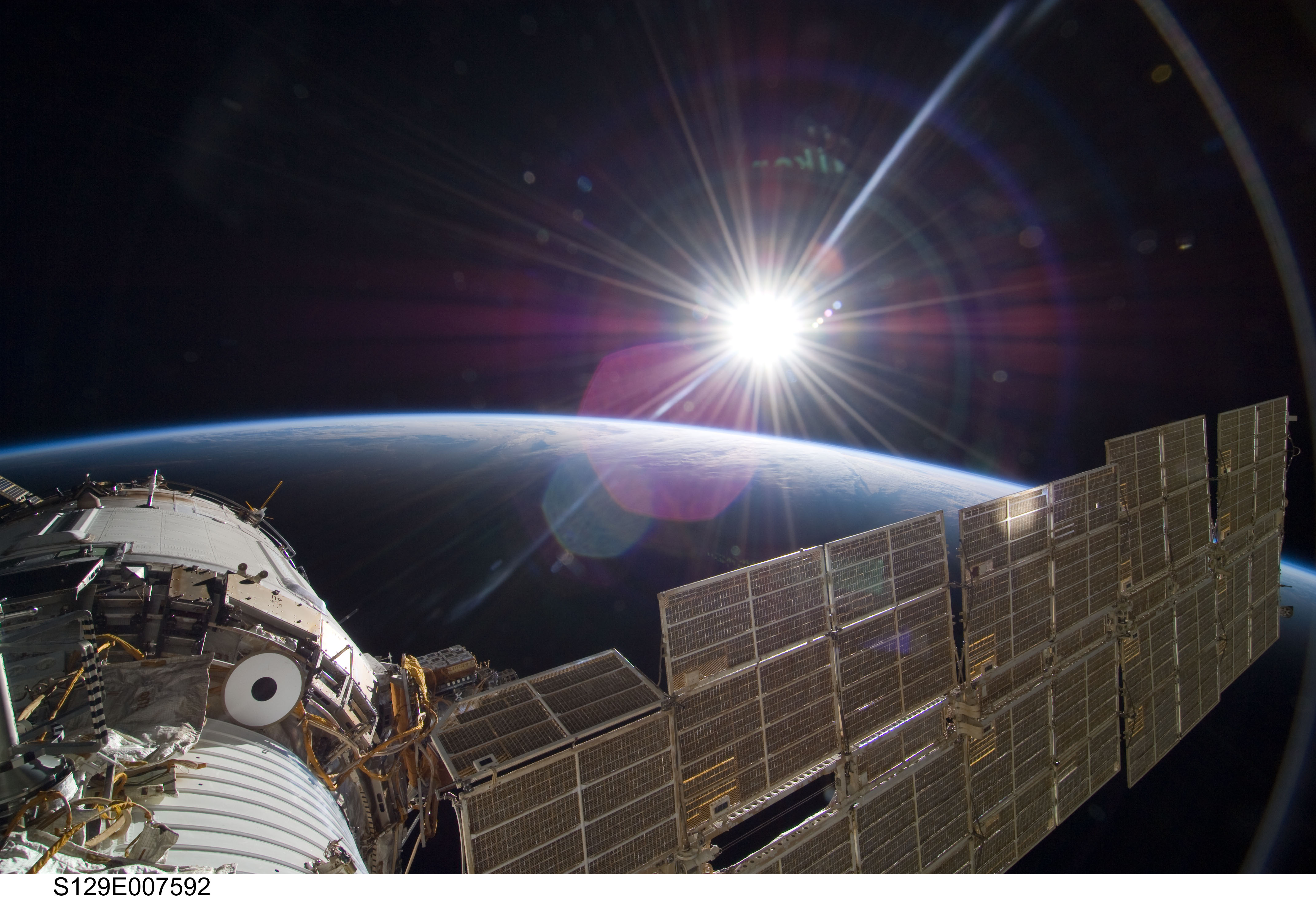
This is one breath taking photo taken from the ISS. The picture taken from the window shows the solar panel of the ISS along with the crescent Earth and the beautiful and bright Sun. One of the most beautiful images I have seen.
23 February 2010
Happy B'day Pluto
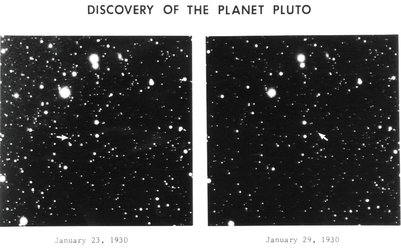
Pluto celebrated its 80th birthday on 18th of this month. Yes, 80 yrs since Clyde Tombaugh discovered the then farthest object of our solar system.
Using Newtonian Mechanics, Neptune's position was predicted before its discovery after analyzing the perturbation in the orbit of Uranus. After Neptune's discovery it was found that the Uranus' orbit was disturbed by another object other than Neptune. The start for the search of a new planet started in 1905 and it took nearly 25 yrs to discover it. Pluto was discovered just like any other planet - by relative movement.
Pluto was so far that it was impossible to identify its diameter or mass. At first it was believed that Pluto was larger than Mercury. Pluto was considered to be the ninth planet of our Solar System until August 2006 when International Astronomical Union (IAU) brought out a definition for the term 'Planet' for the first time and thus Pluto was added in to the list of 'Dwarf Planets' along with the others discovered beyond the orbit of Neptune.
Pluto is now a distinct member of the Kuiper Belt (Similar to Asteroid Belt but this one is found beyond Neptune's Orbit). Three satellites were discovered orbiting Pluto namely Charon, Nix and Hydra.
Dog or Planet:
There is a very famous question which had been asked very often. Which came first? The Dog or the Planet? Pluto, the famous Disney Dog, as well as the planet Pluto were created/discovered in 1930. Some say that the dog was named after the planet and some say that the planet was named after the dog. The question which started in 1930 was answered only in 2006. Venetia Burney (who was 11 yrs old in 1930) was the one who suggested the name Pluto for the planet. It was believed that she was fascinated by the cartoon character Pluto and suggested the same name for the planet. But in 2006, the 88 yr old Venetia said, "The name had nothing to do with the Disney Cartoon. Mickey Mouse's dog was named after the planet, not the other way around."
Using Newtonian Mechanics, Neptune's position was predicted before its discovery after analyzing the perturbation in the orbit of Uranus. After Neptune's discovery it was found that the Uranus' orbit was disturbed by another object other than Neptune. The start for the search of a new planet started in 1905 and it took nearly 25 yrs to discover it. Pluto was discovered just like any other planet - by relative movement.
Pluto was so far that it was impossible to identify its diameter or mass. At first it was believed that Pluto was larger than Mercury. Pluto was considered to be the ninth planet of our Solar System until August 2006 when International Astronomical Union (IAU) brought out a definition for the term 'Planet' for the first time and thus Pluto was added in to the list of 'Dwarf Planets' along with the others discovered beyond the orbit of Neptune.
Pluto is now a distinct member of the Kuiper Belt (Similar to Asteroid Belt but this one is found beyond Neptune's Orbit). Three satellites were discovered orbiting Pluto namely Charon, Nix and Hydra.
Dog or Planet:
There is a very famous question which had been asked very often. Which came first? The Dog or the Planet? Pluto, the famous Disney Dog, as well as the planet Pluto were created/discovered in 1930. Some say that the dog was named after the planet and some say that the planet was named after the dog. The question which started in 1930 was answered only in 2006. Venetia Burney (who was 11 yrs old in 1930) was the one who suggested the name Pluto for the planet. It was believed that she was fascinated by the cartoon character Pluto and suggested the same name for the planet. But in 2006, the 88 yr old Venetia said, "The name had nothing to do with the Disney Cartoon. Mickey Mouse's dog was named after the planet, not the other way around."
15 February 2010
Picture Of The Month - February 2010
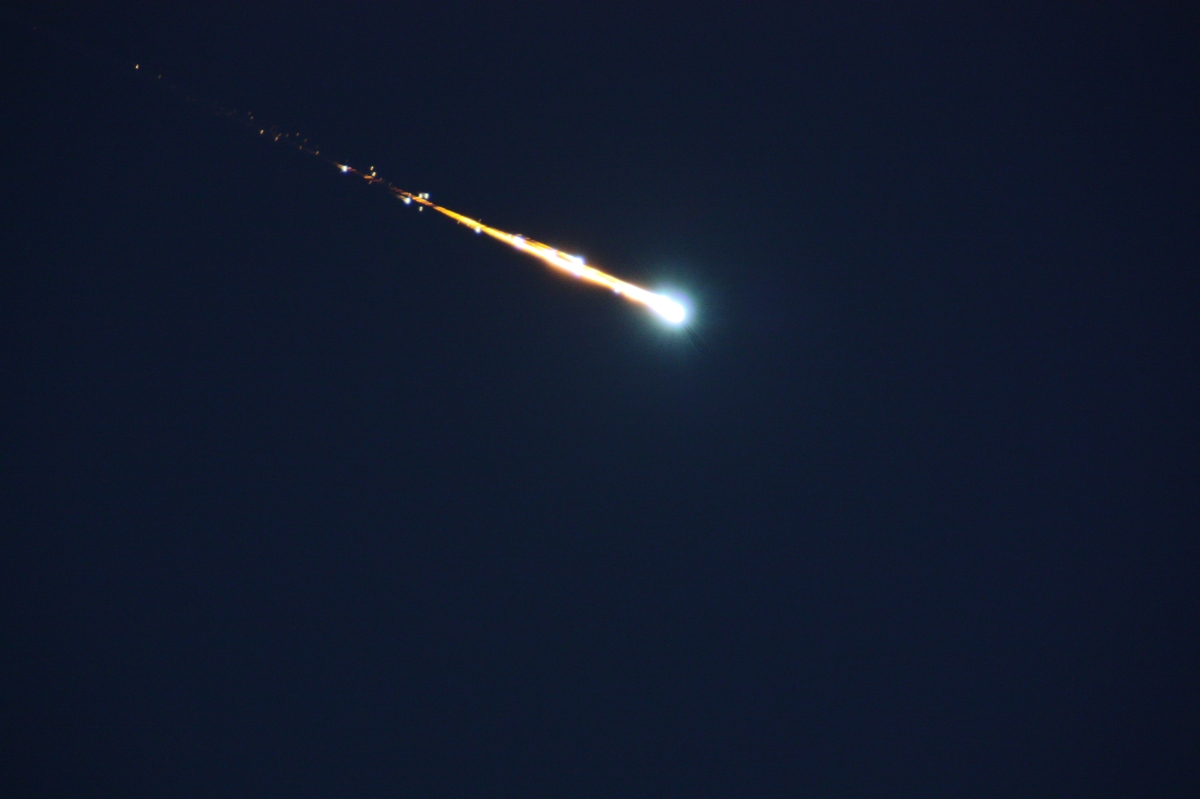
The brilliant fireball meteor, as bright as the full moon was captured in this snapshot over the city of Groningen, Netherlands on October 13th, 2009. The sightings of the meteor were widely reported throughout the Netherlands and Germany at approximately 17:00 UT. Accompanied by sonic booms and rumbling sounds, the meteor was seen to break up into bright fragments, eventually leaving a persistent smoke-like trail. Even though there are bright fireball meteors in planet Earth's atmosphere every day, sightings of them are relatively rare because they more often occur over oceans and uninhabited areas.
Subscribe to:
Posts (Atom)